Meet Dr. Rakesh Mantena
Dr. Rakesh Mantena, DDS, is the lead dentist at Mantena Dental & Implant Center and brings over 15 years of experience in providing patient-focused dental care. He earned his dental degree from the University of Southern California and has practiced dentistry internationally in the United Kingdom and India, giving him a broad and well-rounded clinical perspective.
Dr. Mantena focuses on dental implants and restorative care, helping patients restore function, comfort, and confidence in their smiles. He believes in clear communication, gentle care, and treatment plans tailored to each patient’s goals. Outside the office, he enjoys spending time with his family and staying up to date with the latest advancements in dentistry.
Introduction
Many people believe that straightening teeth is only for teenagers or young adults. But what if you are in your 70’s or 80’s and struggling with chewing, jaw discomfort, or shifting teeth? Is it too late to improve your bite? The simple answer is no. Age alone does not stop you from improving how your teeth function.
At Mantena Dental & Implant Center, Dr. Rakesh Mantena often speaks with seniors who feel frustrated about changes in their bite. Teeth may shift over time. Old dental work may no longer fit correctly. Missing teeth can affect oral balance. Invisalign can help restore better alignment and improve bite function, even later in life.
Let us explore how Invisalign works for seniors and whether it can truly make a difference in your 70’s and 80’s.
Why Bite Function Matters More as We Age
When you are younger, your body can adapt more easily to small changes. But as you grow older, even minor bite problems can cause noticeable discomfort.
Here are common bite-related concerns seniors experience:
- Difficulty chewing certain foods
- Jaw soreness or stiffness
- Uneven tooth wear
- Shifting teeth
- Clicking or popping in the jaw
- Headaches linked to jaw tension
If your teeth do not meet properly, chewing becomes less efficient. Over time, this can lead to digestive issues because food is not properly broken down. Poor bite alignment can also put stress on jaw joints and surrounding muscles.
In your 70’s and 80’s, maintaining function is just as important as appearance. Invisalign is not only about straight teeth. It can help bring balance back to your bite.
If you are experiencing these concerns, it may be time to explore solutions that prioritize comfort and long-term oral health. Discover senior dental care options with Dr. Rakesh Mantena at Mantena Dental & Implant Center to understand whether Invisalign can help improve your bite function and daily comfort.
What Is Invisalign and How Does It Work?
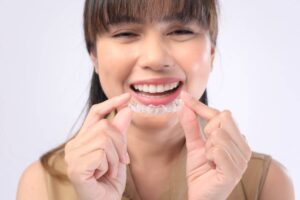
Invisalign uses custom-made, clear plastic aligners to gradually move your teeth into better positions. Instead of metal brackets and wires, you wear removable trays that fit snugly over your teeth.
Each set of aligners is worn for a specific period before switching to the next one. The movement is gentle and controlled. Over time, teeth shift into a more aligned position.
For seniors, the goal is often functional improvement rather than cosmetic perfection. Dr. Rakesh Mantena carefully evaluates each patient to determine whether Invisalign can improve the alignment of the upper and lower teeth. Learn how aligners work for adults with Dr. Rakesh Mantena at Mantena Dental & Implant Center to understand how this treatment can support better bite balance and daily comfort.
Can Teeth Still Move in Your 70’s and 80’s?
This is one of the most common questions seniors ask.
Yes, teeth can move at any age as long as the gums and bone supporting them are healthy. Orthodontic treatment is not limited to teenagers. The biology of tooth movement does not suddenly stop after a certain birthday. Learn how aligners work for adults with Dr. Rakesh Mantena at Mantena Dental & Implant Center to see how safe, guided tooth movement can improve bite function even in your 70’s and 80’s.
However, seniors may have additional factors to consider:
- Gum health
- Bone density
- Existing crowns, bridges, or implants
- History of periodontal disease
Before recommending Invisalign, Dr. Rakesh Mantena checks your overall mouth health. Healthy gums and stable bone are important for safe and predictable tooth movement.
How Invisalign Can Improve Bite Function
Invisalign can address several bite issues that affect seniors.
1. Correcting Overbite or Underbite
When the upper or lower teeth sit too far forward, chewing efficiency decreases. Aligners can gradually reposition teeth to improve tooth alignment.
2. Closing Gaps
Gaps may develop due to bone loss or shifting teeth after extractions. These spaces can trap food and make chewing uncomfortable. Invisalign can reduce these gaps in selected cases.
3. Improving Crowding
Crowded teeth are harder to clean. In seniors, this can increase the risk of gum disease. By gently aligning teeth, cleaning becomes easier, and oral health may improve.
4. Balancing Uneven Wear
Over the decades, certain teeth may wear down more than others. Adjusting alignment can distribute bite forces more evenly.
Better bite balance can reduce strain on jaw joints and muscles.
Invisalign and Dental Implants
Many seniors already have dental implants, crowns, or bridges. You may be wondering whether Invisalign is still an option.
Dental implants do not move like natural teeth. They stay fixed in place. However, Invisalign can often move the surrounding natural teeth to improve alignment around implants. At Mantena Dental & Implant Center, Dr. Rakesh Mantena has experience in both implant dentistry and orthodontic alignment. This combined knowledge helps him plan treatment safely when implants are involved. If you have implants and are considering alignment, get in touch with Dr. Rakesh Mantena for dental guidance and personalized advice.
Each case is unique. Some seniors may need small adjustments. Others may need a more structured plan.
Comfort Considerations for Seniors
Comfort is a major concern for older adults.
Traditional braces can feel bulky and may irritate soft tissues. Invisalign trays are smooth and custom-fitted. Many seniors prefer them because:
- There are no metal wires
- Aligners are removable
- They are easier to clean
- They are less visible
There may be mild pressure when switching to a new set of aligners. This is normal and usually temporary.
Dr. Rakesh Mantena closely monitors progress to ensure the treatment remains comfortable and safe.
How Long Does Treatment Take for Seniors?
Treatment length varies based on complexity.
Some seniors may only need minor adjustments that take several months. Others may need longer treatment if the bite has shifted significantly over time. Consistency matters. Aligners must be worn as directed for the recommended number of hours each day. To understand which timeline may apply to you, explore senior dental care options with Dr. Rakesh Mantena at Mantena Dental & Implant Center and receive guidance tailored to your individual needs.
Age does not automatically mean treatment takes longer. The health of the gums and bone plays a bigger role than age itself.
Daily Life with Invisalign in Your 70’s and 80’s
Many seniors appreciate that Invisalign does not drastically change their routine.
You remove the trays for brushing and cleaning. Maintaining good oral hygiene remains essential.
If you wear dentures, partial dentures, or have implants, your plan will be customized accordingly.
Patients often report:
- Easier chewing after alignment improves
- Reduced jaw tension
- Better confidence when smiling
The changes are gradual, but they can be meaningful.
Is Invisalign Safe for Older Adults?
When carefully planned, Invisalign is safe for healthy seniors.
Safety depends on:
- Stable gum condition
- Proper bone support
- Regular dental monitoring
Dr. Rakesh Mantena performs a detailed examination before recommending treatment. Imaging and clinical evaluation help determine whether Invisalign is appropriate.
If it is not suitable, alternative options are discussed.
The Importance of a Personalized Approach
Every senior patient has a different dental history.
- Some have implants.
- Some have crowns.
- Some have partial dentures.
- Some have experienced tooth loss.
There is no one-size-fits-all plan.
At Mantena Dental & Implant Center, treatment is tailored to your specific needs. Dr. Rakesh Mantena evaluates your full dental picture before recommending Invisalign.
Final Thoughts Before Starting Treatment
If you are in your 70s or 80s and experiencing chewing discomfort, uneven bite pressure, or shifting teeth, Invisalign may be worth discussing.
Improving bite function can help:
- Make chewing easier
- Reduce jaw discomfort
- Protect remaining natural teeth
- Support overall oral health
Age should not automatically preclude functional improvement.
Frequently Asked Questions
1. Is 75 too old to start Invisalign?
No. As long as your gums and bone are healthy, age alone does not prevent treatment.
2. Can Invisalign help if I already have dental implants?
Yes, in many cases, Invisalign can move natural teeth around implants to improve alignment.
3. Will Invisalign hurt more at my age?
Most seniors experience mild pressure, similar to that experienced by younger patients. Discomfort is usually temporary.
4. How long will treatment take in my 80’s?
Treatment time depends on complexity, not age. Some cases are shorter, others longer.
5. Can Invisalign improve chewing ability?
In many cases, improving alignment helps teeth meet properly, making chewing more efficient.
Conclusion
Invisalign is not just for young people seeking cosmetic changes. For seniors in their 70s and 80s, it can provide meaningful improvements in bite function, comfort, and daily living.
When planned carefully and supported by healthy gums and bone, tooth movement is possible at any age. Find information on clear aligners shared by Dr. Rakesh Mantena at Mantena Dental & Implant Center to understand better how this treatment can support long-term oral health and comfort.
At Mantena Dental & Implant Center, Dr. Rakesh Mantena evaluates each senior patient with care and honesty. The goal is not perfection. The goal is comfort, balance, and better function. If bite problems are affecting your quality of life, it may be time to explore whether Invisalign can help.
Remember: It is never too late to improve how your teeth function. Healthy gums and proper evaluation are the key first steps.
Disclaimer: This blog is for educational purposes only and does not replace professional dental advice. Please schedule a consultation with Dr. Rakesh Mantena at Mantena Dental & Implant Center for personalized evaluation and treatment recommendations.